Case Study
Upshield
A Web3 cybersecurity platform providing real-time threat monitoring and security coverage for smart contracts, servers, and blockchain protocols — helping engineering teams detect and respond to threats before they cause damage.
Role
UX/UI Designer
Timeline
2023 — 2024
Tools
Figma
Type
Web3 / Cybersecurity
My Contribution
Information Architecture
Building on top of existing information architecture, extended and refined the navigation structure to accommodate new features and monitoring categories.
Wireframing
Translated product requirements into structured wireframes covering all key views and interaction states.
High-Fidelity UI
Designed a clean, light-themed interface with strong data visualization and severity-coded alert states for fast threat triage.
Interactive Prototypes
Built Figma prototypes covering the main user flows for client review and developer handoff.
Design System
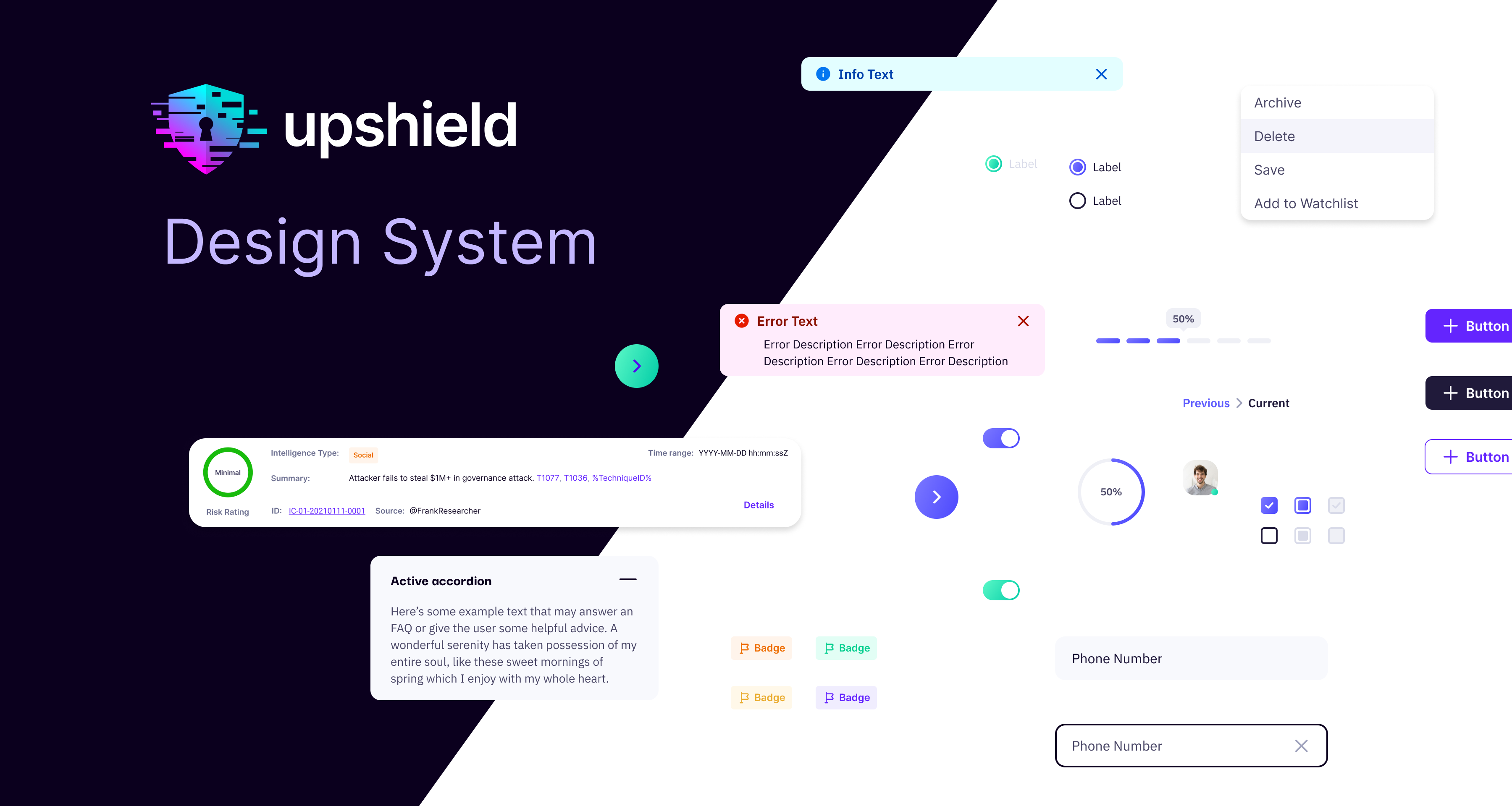
Established a consistent component library including alert badges, coverage gauges, data tables, and overlay patterns.
Dashboard
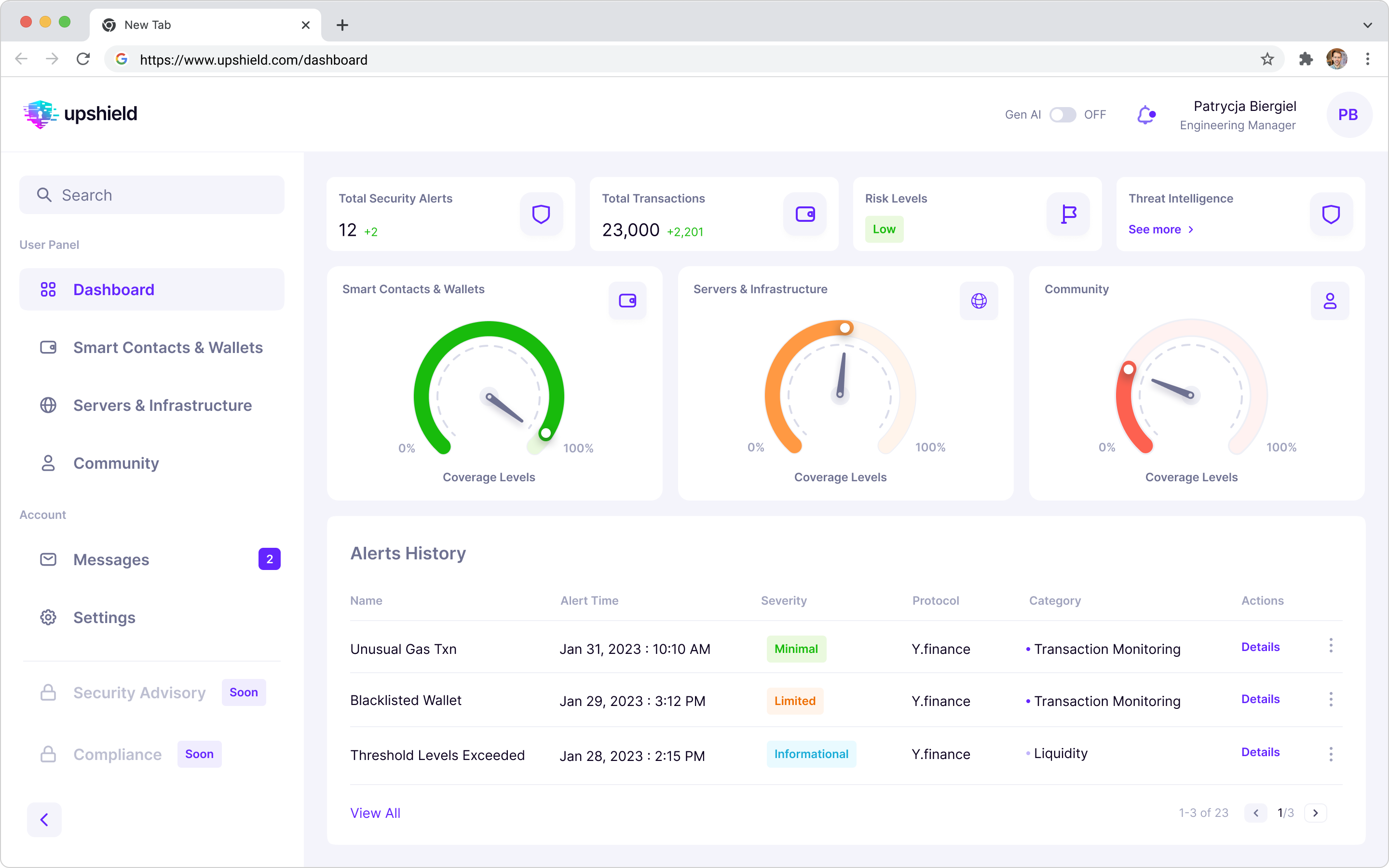
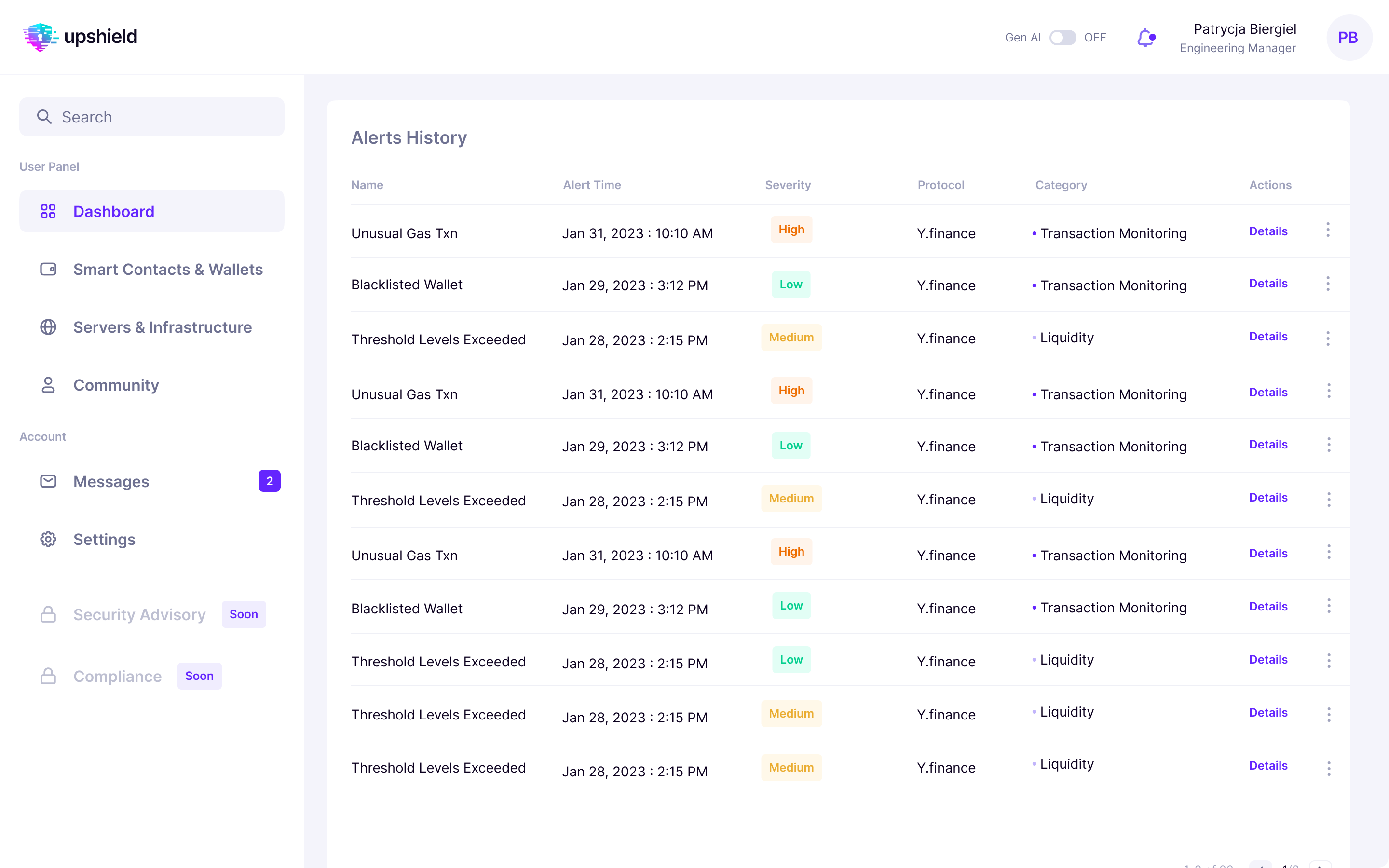
The central command view — giving security engineers and engineering managers an at-a-glance overview of their entire security posture across smart contracts, servers, and community activity, with live alert tracking and severity-coded threat history.
Security Overview
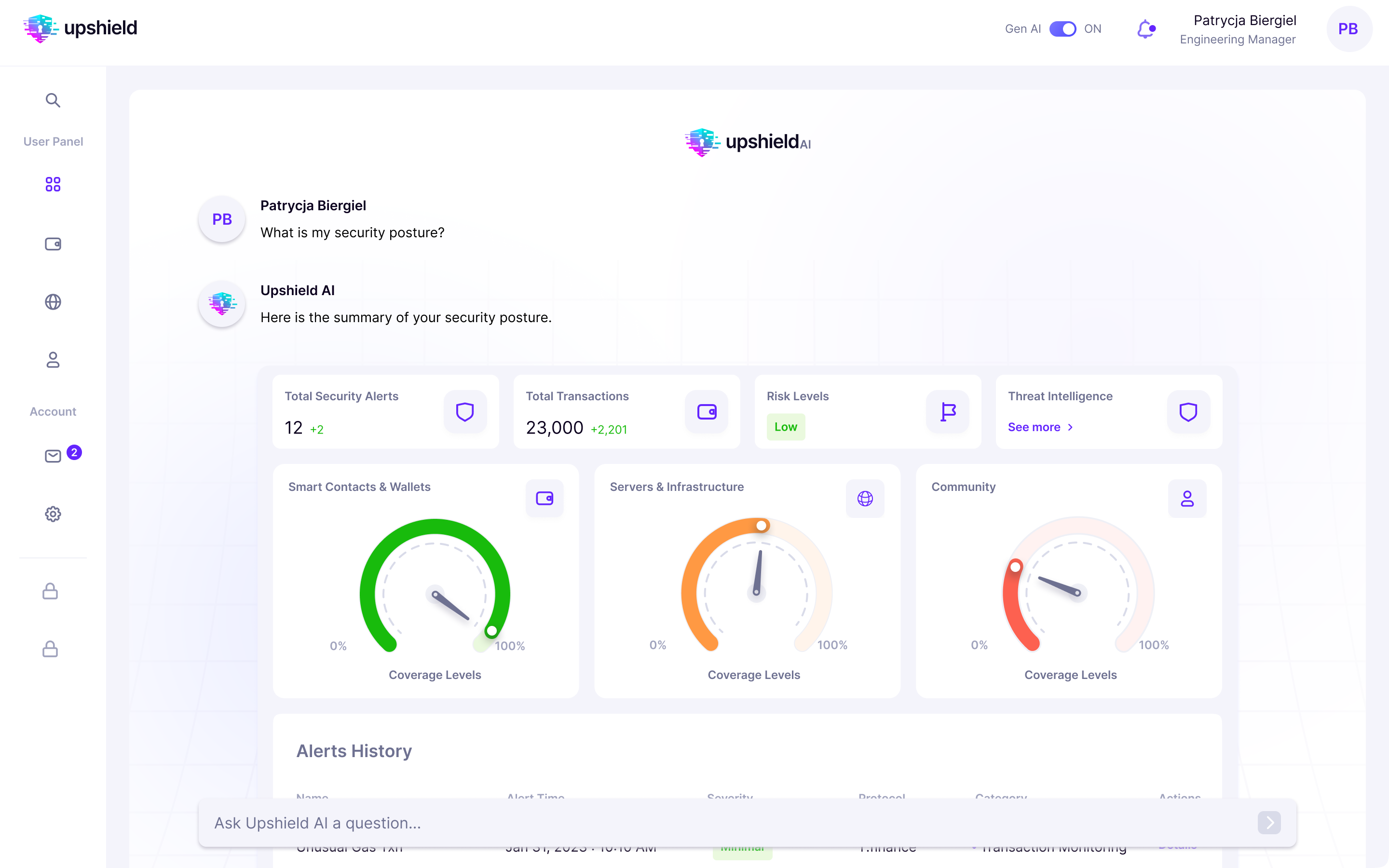
Four top-level KPIs — Total Security Alerts, Total Transactions, Risk Level, and Threat Intelligence — give immediate situational awareness without requiring any navigation.
Coverage Gauges
Visual gauge meters per category (Smart Contracts, Servers, Community) show coverage levels at a glance, using color to communicate health: green for good, orange for moderate, red for critical.
Alert Detail Overlay
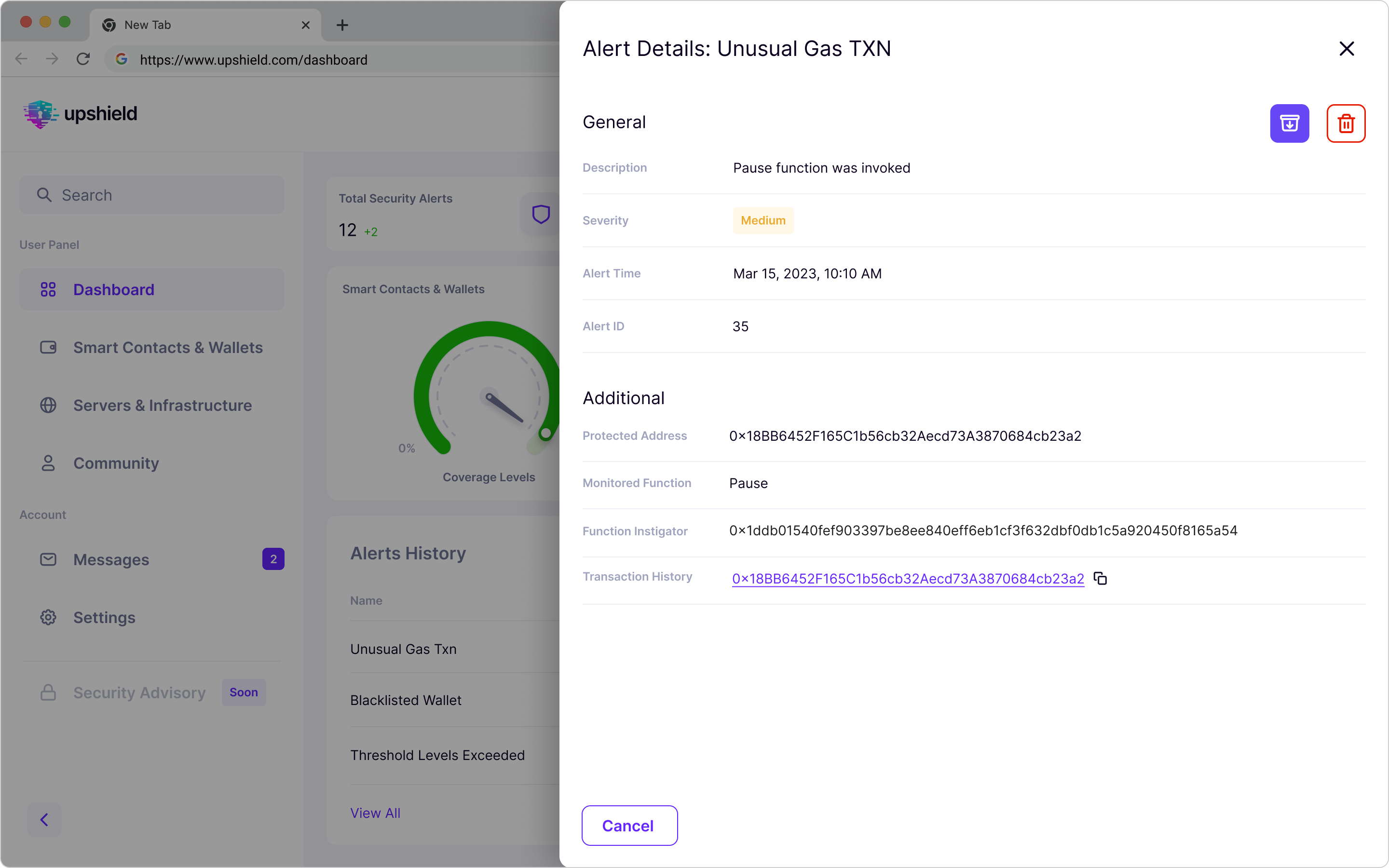
Clicking any alert opens a structured detail panel showing severity, alert time, protected address, monitored function, and a direct link to transaction history on-chain.
Smart Contracts & Wallets
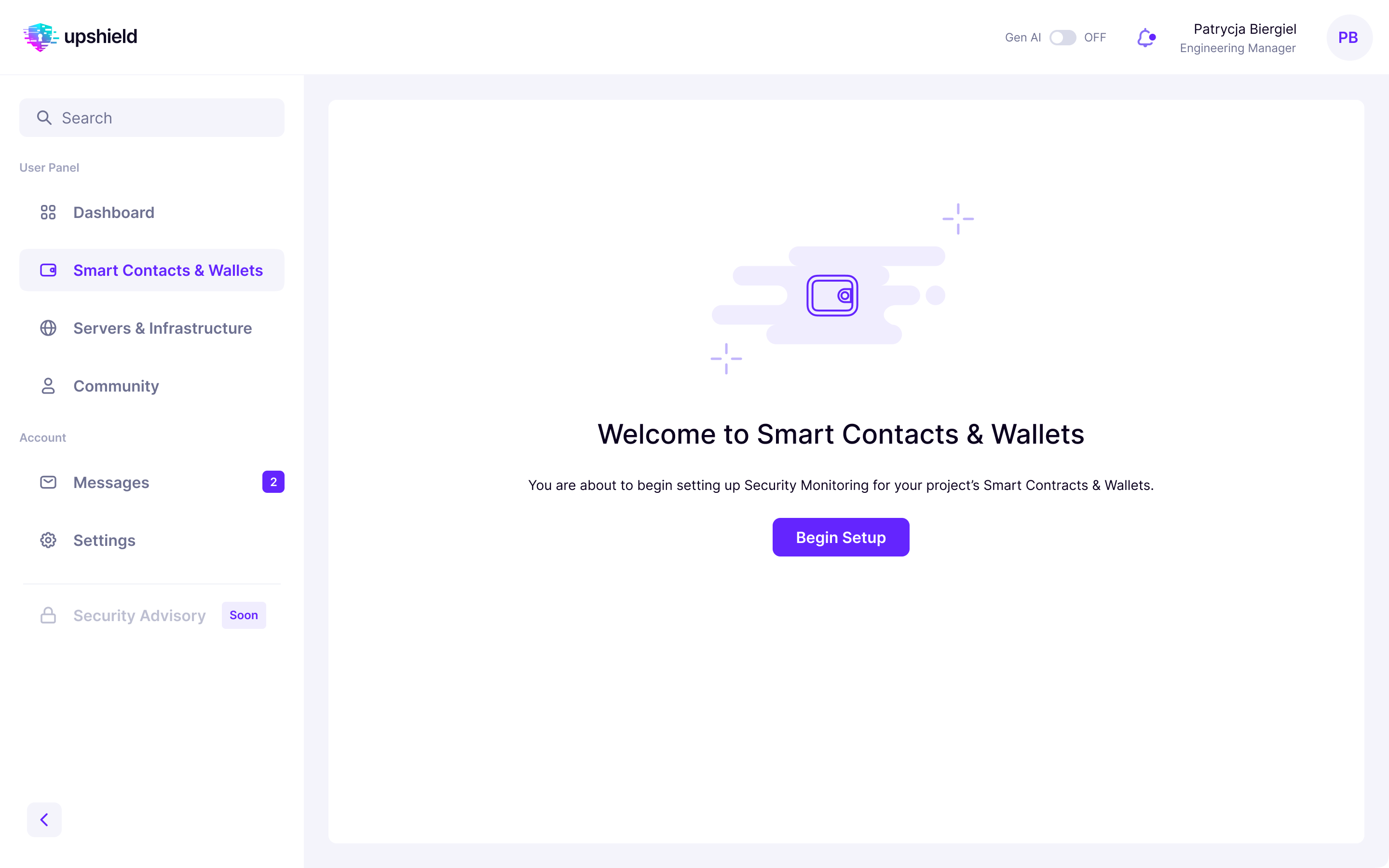
A dedicated monitoring space for all smart contract addresses and wallets under protection — tracking transaction activity, detecting anomalies, and surfacing alerts specific to on-chain behavior.
Begin Setup
A clean empty state welcomes new users with a clear call-to-action, reducing friction at the start of the onboarding flow.
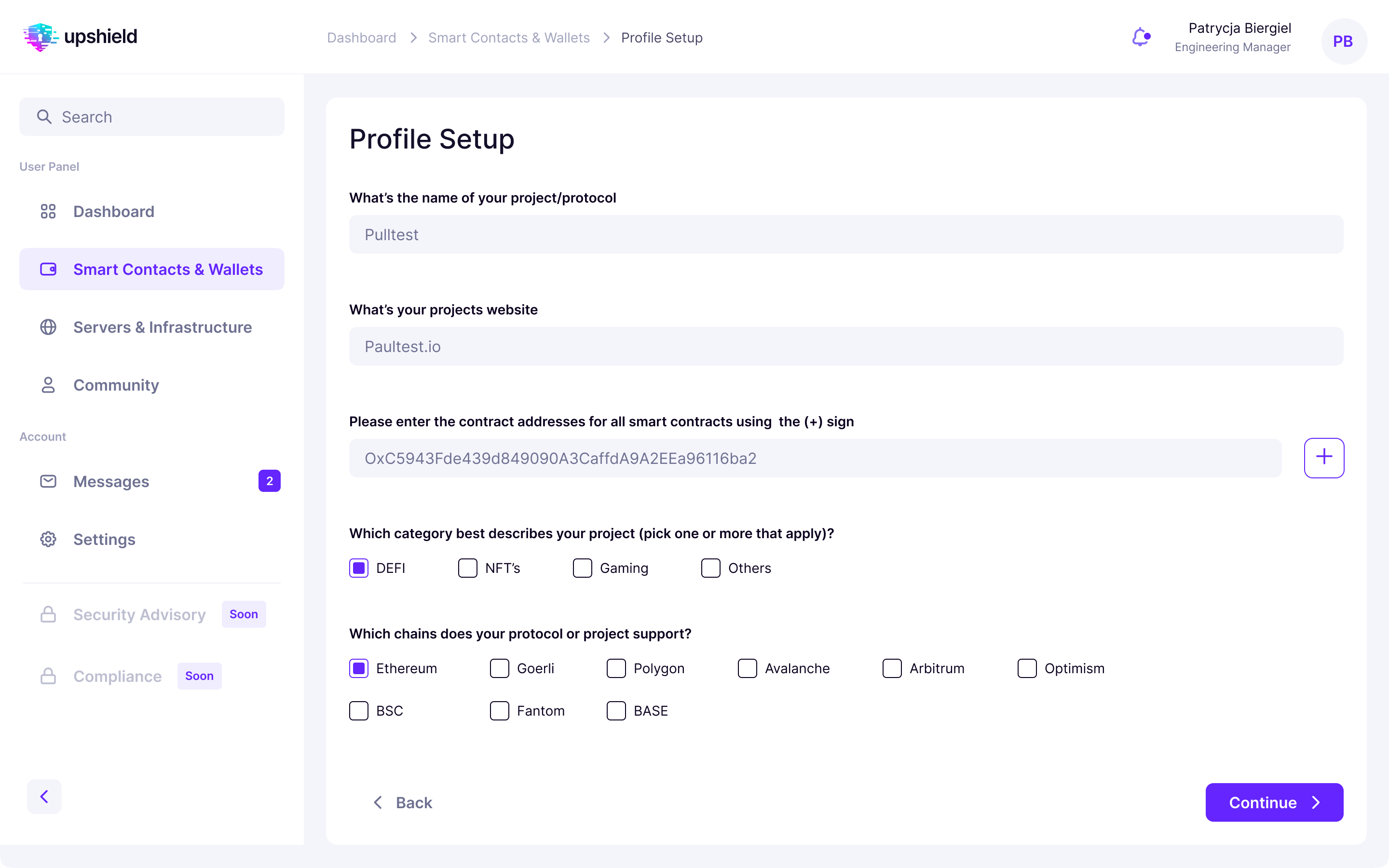
Profile Setup
Users define their project name, website, contract addresses, project category, and supported chains — giving Upshield the context it needs to monitor the right assets.
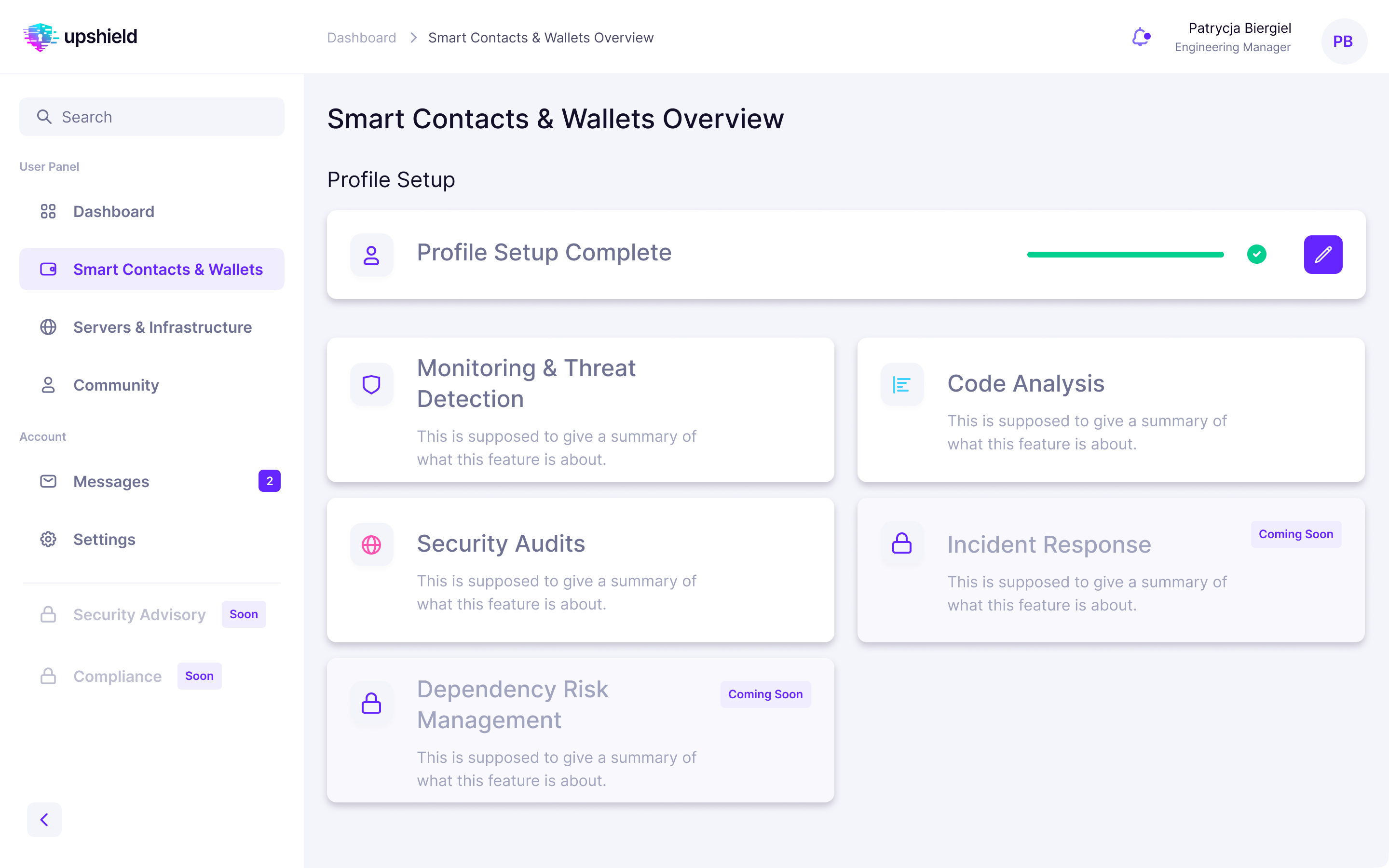
Setup Complete
Once configured, users land on the Smart Contracts & Wallets Overview with access to Monitoring & Threat Detection, Code Analysis, Security Audits, and more.
Upshield AI
An AI-powered layer that analyzes threat patterns, surfaces actionable insights, and helps security teams prioritize response — reducing the manual effort required to triage high volumes of blockchain security events.
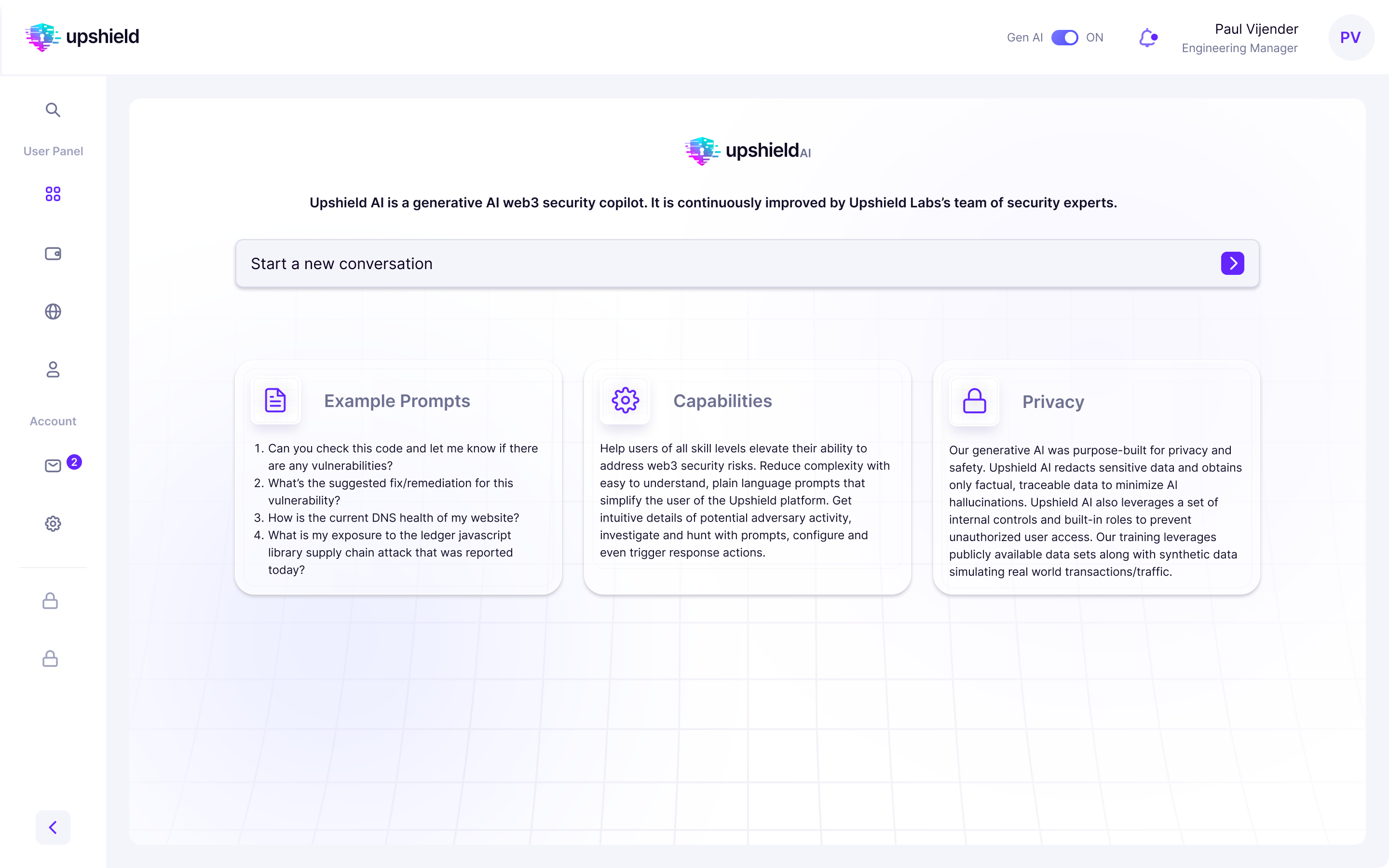
Conversational Interface
Users start a conversation with Upshield AI using natural language. Example prompts guide new users toward common security queries like vulnerability exposure and supply chain attack checks.
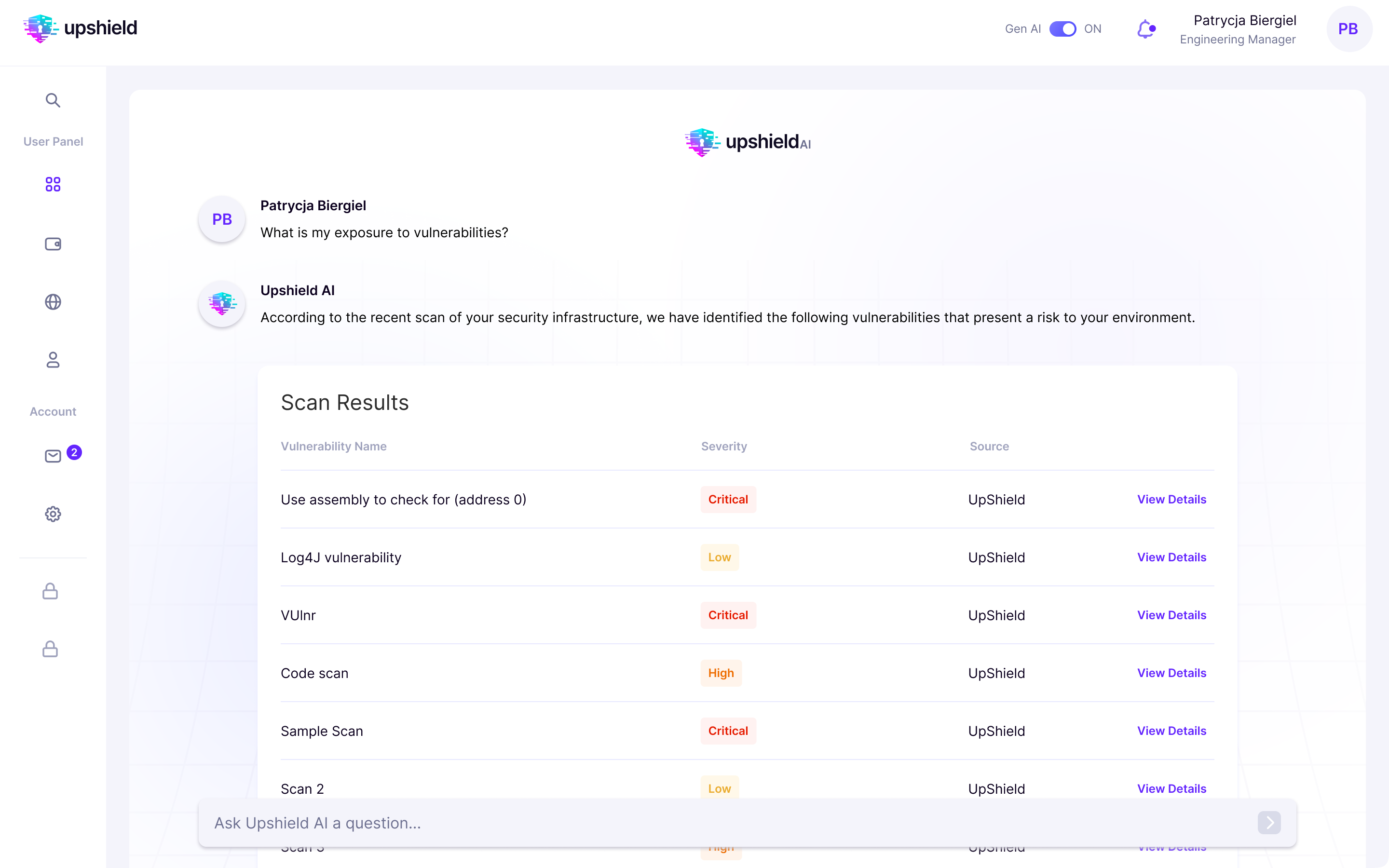
Scan Results
The AI surfaces a prioritized vulnerability list with severity badges — Critical, High, Low — and source attribution, giving security teams an immediate, actionable threat overview.
Security Posture Summary
Upshield AI can pull live platform data into the conversation, presenting a full security posture summary including alerts, coverage gauges, and transaction stats directly in the chat.
Component Library
A consistent set of reusable components built to support the full platform — including form elements, alert states, badges, toggles, overlays, and action menus — ensuring visual and functional consistency across all features.
Outcome
Upshield was my first end-to-end product design project. Working without prior iterations, I designed the full platform from scratch — covering the dashboard, monitoring views, and AI-powered threat analysis — delivering a complete set of high-fidelity screens ready for development handoff.
The project established strong foundations in information architecture, data-heavy UI design, and building consistent component systems for complex SaaS products.